

%20(1)%20(1).png)
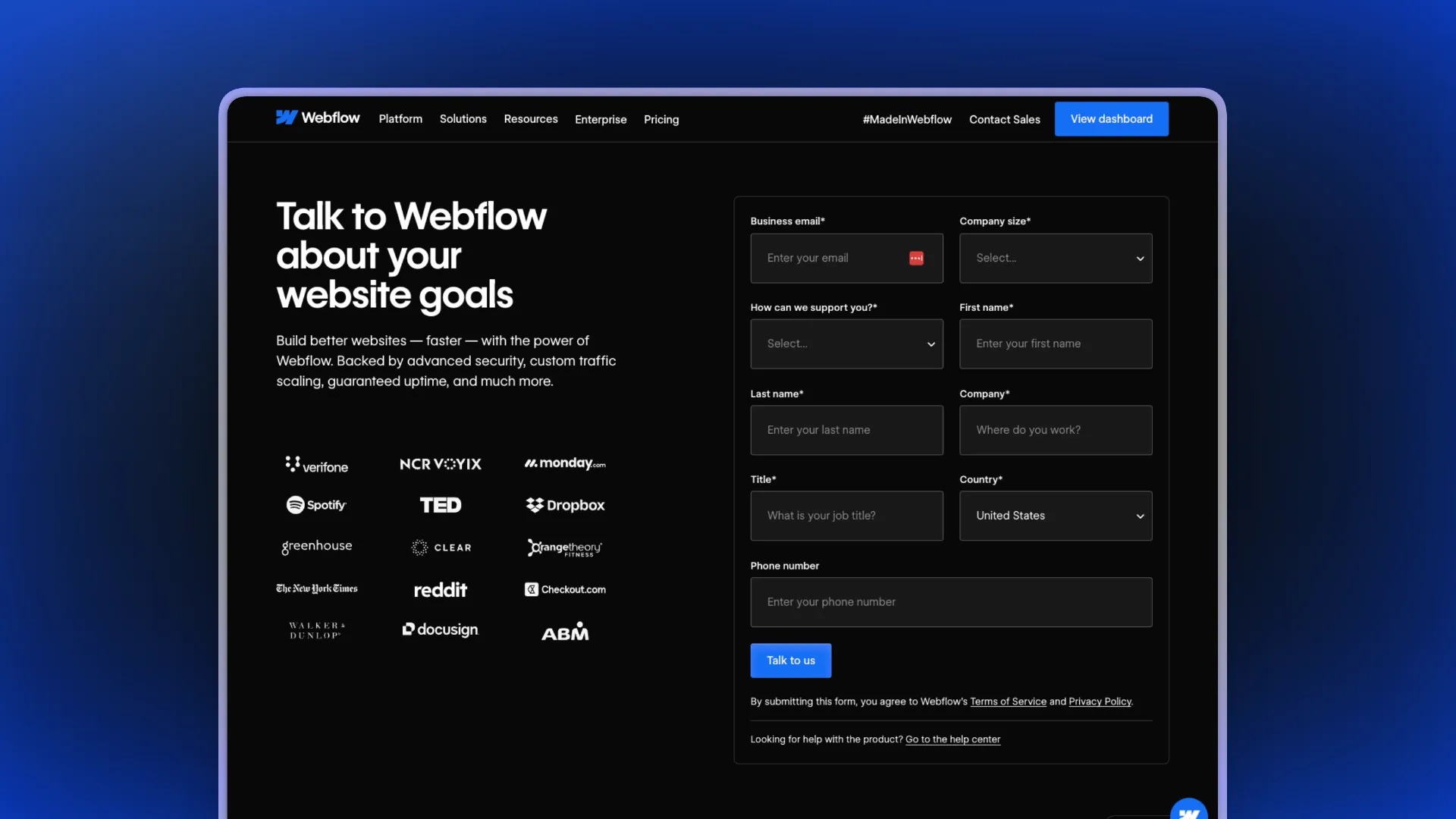
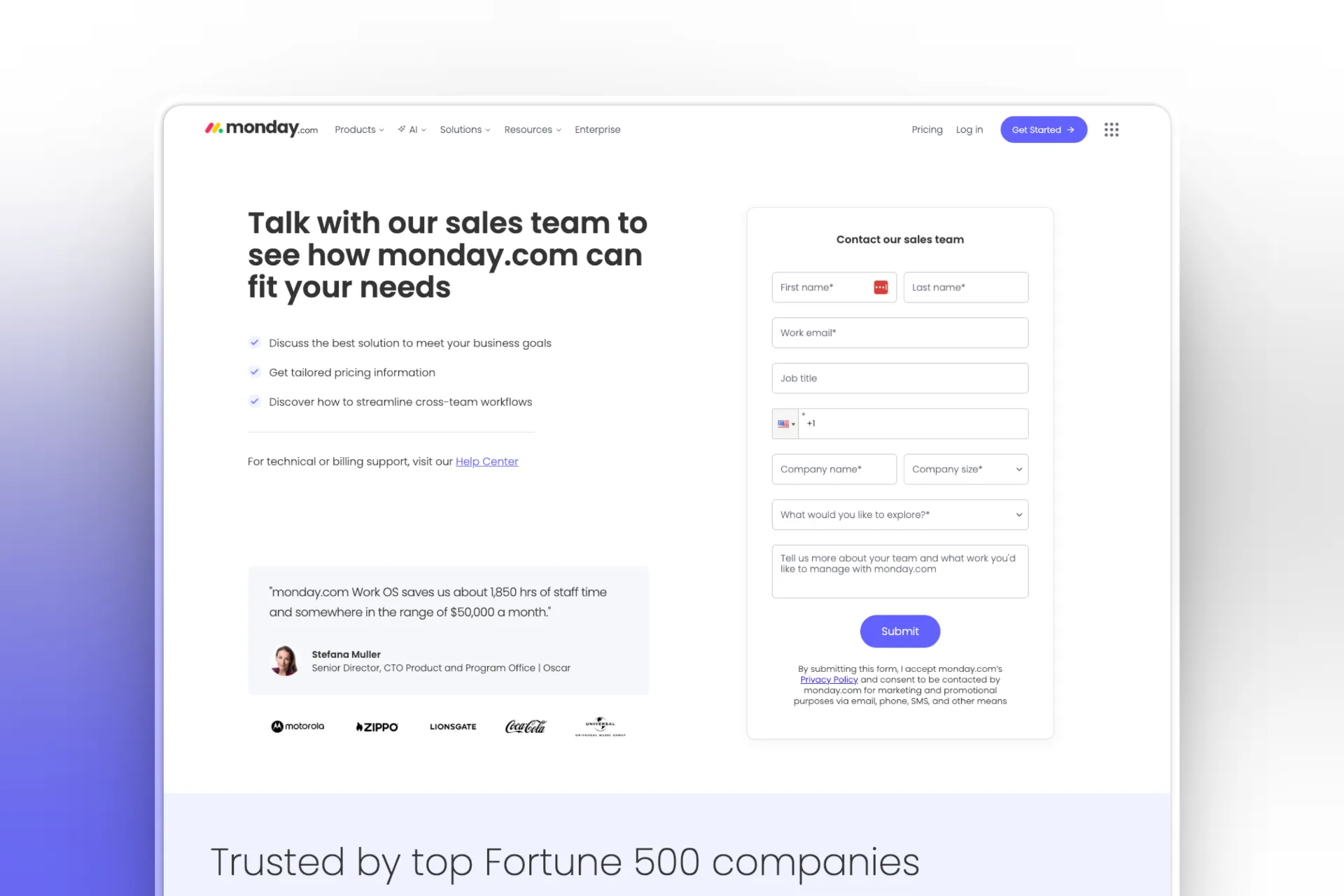
Most SaaS demo pages lead with "Book a Demo." That's not a headline. That's a button label.
Your headline is the first thing a visitor reads and the primary reason they stay or leave. On a demo page, you're asking for someone's time and willingness to talk to sales. The headline is where you earn that, or lose it.
This post breaks down four proven headline formulas, 12 ready-to-use SaaS demo page headline examples built from those formulas, and how to run a proper A/B test so you know which one wins with your audience.
However, sometimes your headline is fine and there's other issues affecting your demo page conversion rate. Check out our guide on Why Your SaaS Demo Page Isn't Converting (Simple Fix).
How Demo Page Headlines Affect Conversions
Most demo pages treat the headline as an afterthought. They pull the product name into an H1, add a subheading like "See it in action," and call it done.
Here's what that costs you: visitors who are already sold on your category but unsure if you're the right fit need to see themselves in your headline. "Book a Demo" tells them nothing. A specific headline — "Get a 30-minute walkthrough built around your use case" — does the work a generic one can't.
Your headline sets two things before a visitor reads a single bullet point: what they're getting and who it's for. Both of those directly impact whether they fill out the form.
4 Formulas for Writing SaaS Demo Page Headlines
These formulas come from a widely-shared breakdown of SaaS headline writing. The originals were written for product homepages. Here's how each one translates to a demo page, where the ask is different — you're not selling the product, you're selling 30 minutes of someone's time.
Formula 1: Get/The {desired outcome} without {objection}
On a homepage, the objection is usually about switching tools or learning something new. On a demo page, the objection is almost always the same: "I don't want to get on a call with a salesperson."
The "without" clause does the heavy lifting. It gets the objection out in the open and neutralizes it before the visitor has to ask.
Demo page examples:
- "Get a 30-minute walkthrough without sitting through a scripted product tour"
- "See [Product] in action without committing to a sales process"
- "Book a custom demo without the hard close at the end"
Formula 2: The all-in-one {category} for {specific audience}
On a homepage, this formula positions your product. On a demo page, it positions the demo itself — who it's built for and what makes it different from a generic "request a demo" experience.
Demo page examples:
- "A demo built for [ICP] teams, not a 60-minute feature dump"
- "The evaluation experience for [ICP] teams who've already done their research"
The more specific the audience label, the more the right visitors feel like the page was made for them, and the more the wrong visitors filter themselves out before wasting your sales team's time.
Formula 3: Get up to {percentage} more {measurable benefit} through {product role}
On a homepage, this formula leads with the product's value. On a demo page, flip it: lead with what the prospect will walk away knowing, not what your product does.
This formula works best when you have real customer data. Guessing at numbers backfires.
Demo page examples:
- "See how [Product] customers cut [metric] by [X]% — and whether your team can do the same"
- "Book a demo to see if [Product] can hit the [X]% pipeline growth your board is asking for."
Formula 4: The {adjective} way to {desired goal}
On a homepage, this builds confidence in the product. On a demo page, it builds confidence in the process. The "desired goal" isn't the product outcome — it's the evaluation itself.
Demo page examples:
- "The fastest way to find out if [Product] is the right fit for your team"
- "The no-pressure way to evaluate [Product] before you talk to pricing"
- "The straightforward way to see [Product] without the dog-and-pony show"
12 SaaS Demo Page Headlines to Steal and Adapt
Here are 12 ready-to-test saas demo page headline examples, organized by formula. Swap in your product name, ICP, and numbers where relevant.
Formula 1: Outcome Without Objection
- "Get a custom demo without sitting through a 45-minute feature walkthrough"
- "See exactly how [Product] fits your workflow without committing to anything"
- "Book a 30-minute demo without the sales pressure"
Formula 2: All-In-One for a Specific Audience
- "A demo built around your use case, not our slide deck"
- "Designed for [ICP] teams evaluating [category] tools this quarter"
Formula 3: Get X% More Through
- "See how [Product] helped [customer type] cut [metric] by [X]% in [timeframe]"
- "Book a demo. See why [Product] customers grow [metric] 3x faster."
Formula 4: The Adjective Way To
- "The fastest way to evaluate [Product] for your team"
- "The straightforward way to see [Product] without the dog-and-pony show"
Hybrid and Original
- "30 minutes. No pitch. Your questions, your agenda."
- "See [Product] in action. No commitment, no hard close."
- "Get a demo tailored to your team size, your goals, and your budget."
Headlines 10, 11, and 12 don't fit cleanly into one formula — they work because they address the most common demo page objection directly: fear of a high-pressure sales call. If your market is skeptical of sales conversations, these tend to outperform formula-driven alternatives in testing.
How to A/B Test Your Demo Page Headline
Writing twelve headlines is the easy part. Knowing which one wins is where most founders stop short.
A proper headline test on a demo page requires enough traffic to reach statistical significance before you make a call. If your page gets fewer than 500 visitors per month, run one test at a time and give it at least 30 days before drawing conclusions.
Setting Up the Test
Pick two headlines: your current headline and one challenger. Run them 50/50 using Mida.so. Keep every other element on the page identical. Change only the headline.
Your success metric is demo form submissions, not scroll depth or time on page. The only number that matters is whether someone completed the form.
What to Test First
Start with a Formula 1 headline against your current headline. The "outcome without objection" structure addresses the most common demo page drop-off reason — fear of a sales call — while still communicating value. It's the highest-probability challenger for most B2B SaaS demo pages.
Once you have a winner, move to the next variable. Headline first, then CTA copy, then form length. One change at a time.
For a step-by-step walkthrough of how to structure and run this test, watch this video 👇
Want 147 more tips like this? Get our free 148-point landing page checklist.
If your SaaS website is only converting at 1-2%, the problem is almost always fixable, and it's almost never your product. A cleaner layout, more specific headlines, and the right social proof can move you from 2% to 10% CVR faster than any ad campaign adjustment.
Get the free checklist here: https://www.fitrmedia.com/funnels/saas-sidekick